Wet lab validation for AI Bio Models.
trace provides experimental characterization for discovery teams. Use electrochemical and biophysical data to evaluate candidates, benchmark models, and guide the next design cycle, with every run recorded so every result traces back to how it was made.
01 Approach
The experimental feedback problemClose the gaps in experimental feedback.
Testing AI-generated molecular designs requires lab capacity. Comparing results requires conditions and controls. Understanding an outcome also requires a record of how the work was performed.
Trace connects those needs: measured responses for candidate testing and lead optimization, with evidence for training and evaluating molecular design models and scientific AI agents.
Test designs
Which proposed designs work?
Interpret results
What conditions shaped the result?
See the execution
What happened at the bench?
02 Capabilities
Inspect the evidenceMeasurements with
the experiment behind them.
Experimental evidence across both molecular outcomes and physical execution. Inspect a response, the conditions behind it and the visible actions recorded at the bench.
A / Measurements
Molecular outcomes.
Compare candidate responses under defined conditions. Inspect raw curves, controls, repeated measurements and quality information for candidate testing, lead optimization and evaluation of molecular design predictions.
| Construct | KD (nM) | Sample outcome |
|---|
Source order · Select a construct to inspect its record.
B / Execution records
Physical execution.
Turn bench images and recordings into labelled objects, scene descriptions and timed action records.
Inspect the bench and its contents.
An annotated photograph pairs object boxes with a categorized inventory and a description of the scene and task.
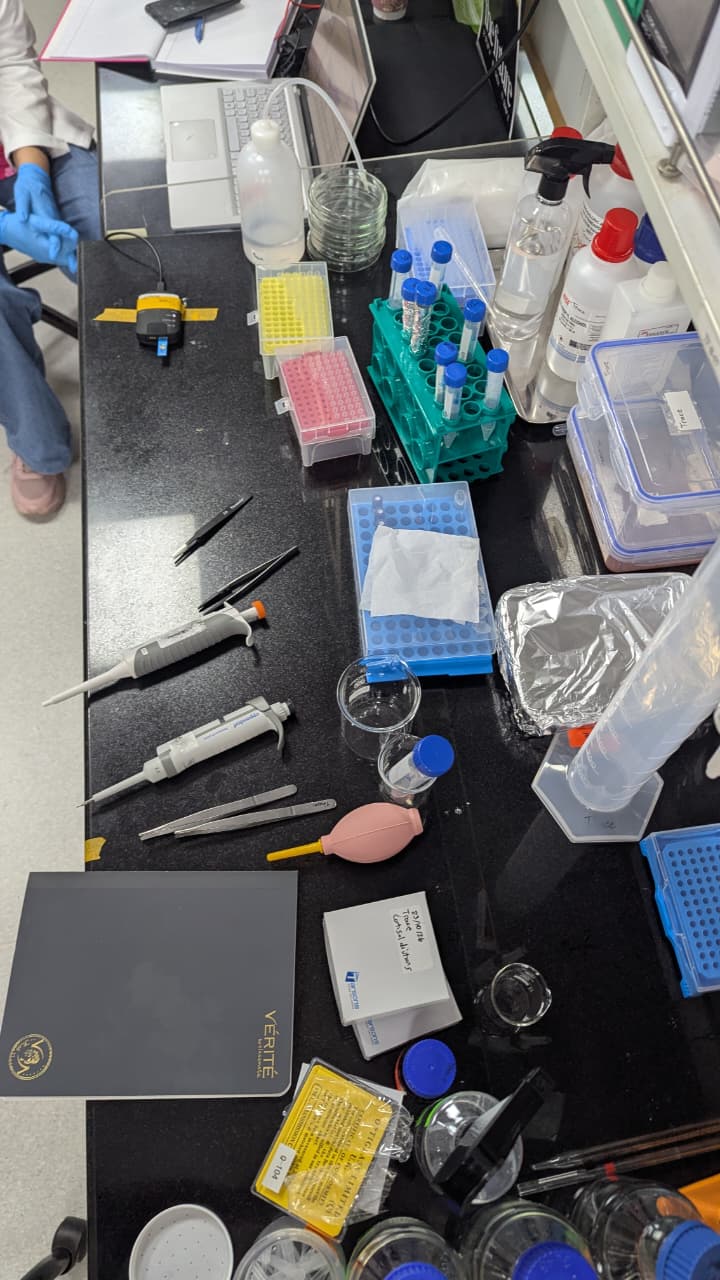
Object inventory
32 annotatedAction record
AI-assistedSelect an action to seek to its start.
Scene and task context
Task
About these annotations
AI-generated annotations. Observations marked VERIFY need human review. Camera views do not establish reagent identity or transferred volume. Object tracking can drift with camera movement.
Take a closer look
Inspect a sample.
Explore the record structure, field definitions and delivery formats.
Protein binder format sample · v0
Fields cover molecular design, assay conditions, production, binding, fit quality, stability, device response and outcome.
Download sample pack03 Vision
A researcher-led loopA continuous loop between AI-driven design and experimentation.
We envision molecular design models and scientific AI agents working within a researcher-led cycle of design, experimentation and analysis. Measured outcomes inform candidate selection and the next design round; execution records help agents inspect how experiments were performed.
Trace's role is to connect experimental data generation with training and evaluation evidence, across both molecular outcomes and physical execution.
and scientific AI agentsDesigns and experiment plans
↶ Evidence informs the next design round
Researchers define the goals. Evidence informs the next round.